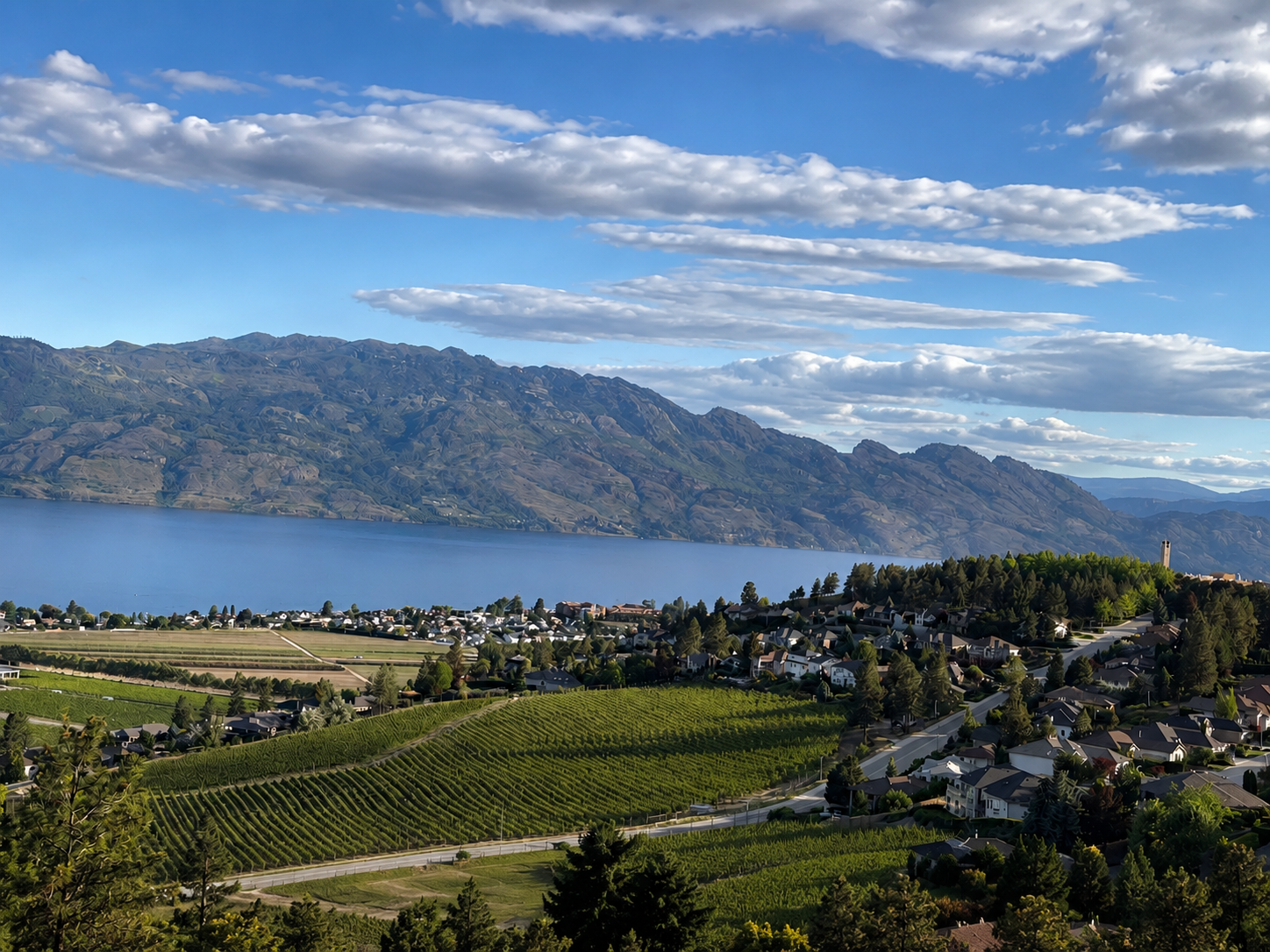
 West Kelowna has a long-term plan for how it wants to grow, and like most city documents, it is not exactly beach reading. It's called the Official Community Plan, or OCP, and it looks at where homes could be built, how neighbourhoods may change, what parks and trails should be protected, and what the city wants West Kelowna to feel like by 2040. It is not a crystal ball. Some things will happen. Some things will take forever. Some things may never leave the meeting room. But if you live here, own property here, or are thinking about moving here, it gives you a pretty good idea of where West Kelowna is headed. I read it so you don't have to.
What is the Official Community Plan?
Think of it as the city's game plan. It doesn't approve any single building or fix any single intersection. Instead, it decides where growth should happen, what kinds of homes belong where, which green spaces should be protected, and what the priorities are when developers come knocking. Every rezoning and development application gets measured against it.West Kelowna is planning for growth
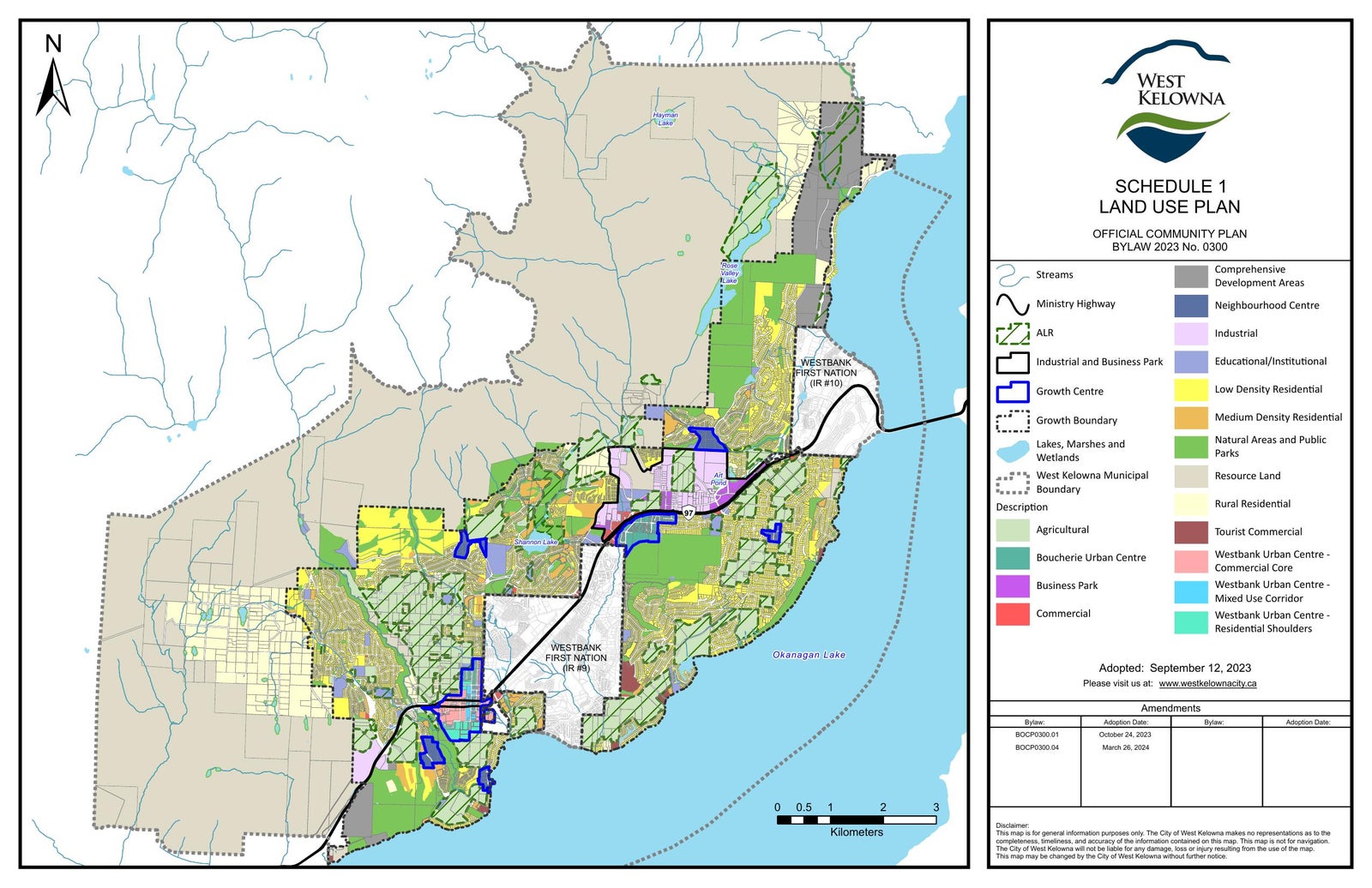 The city is planning room for roughly 12,000 more homes and up to about 32,000 more people by 2040 — and that's a deliberate over-estimate, so the city isn't caught off guard. Here's the part I find encouraging: instead of sprawling outward, the plan says no new suburban neighbourhoods. Growth gets focused into two urban centres — Westbank Centre and Boucherie — and five smaller neighbourhood centres: Rose Valley, Smith Creek & Shannon Lake, Lakeview Heights, Gellatly Village, and Goats Peak. Translation: the hillsides and rural edges that make West Kelowna feel like West Kelowna stay mostly as they are, while the busy parts get busier — on purpose.
More focus on neighbourhoods, not just houses
This might be my favourite theme in the whole plan. Those five neighbourhood centres aren't just spots for more housing — they're meant to become little hubs where you can walk to a coffee shop, a daycare, or a corner store without driving down the hill. The plan calls for small-scale shops at street level with homes above, buildings kept to a modest scale, and streets designed for people on foot. The plan even encourages pop-up shops and uses that bring streets to life in the daytime and evening. Downtown Westbank is slated for a central park and plaza designed for festivals and community events. More reasons to bump into your neighbours — that's the social side of city planning, and it's all over this document.Parks, trails, lake access, and outdoor living
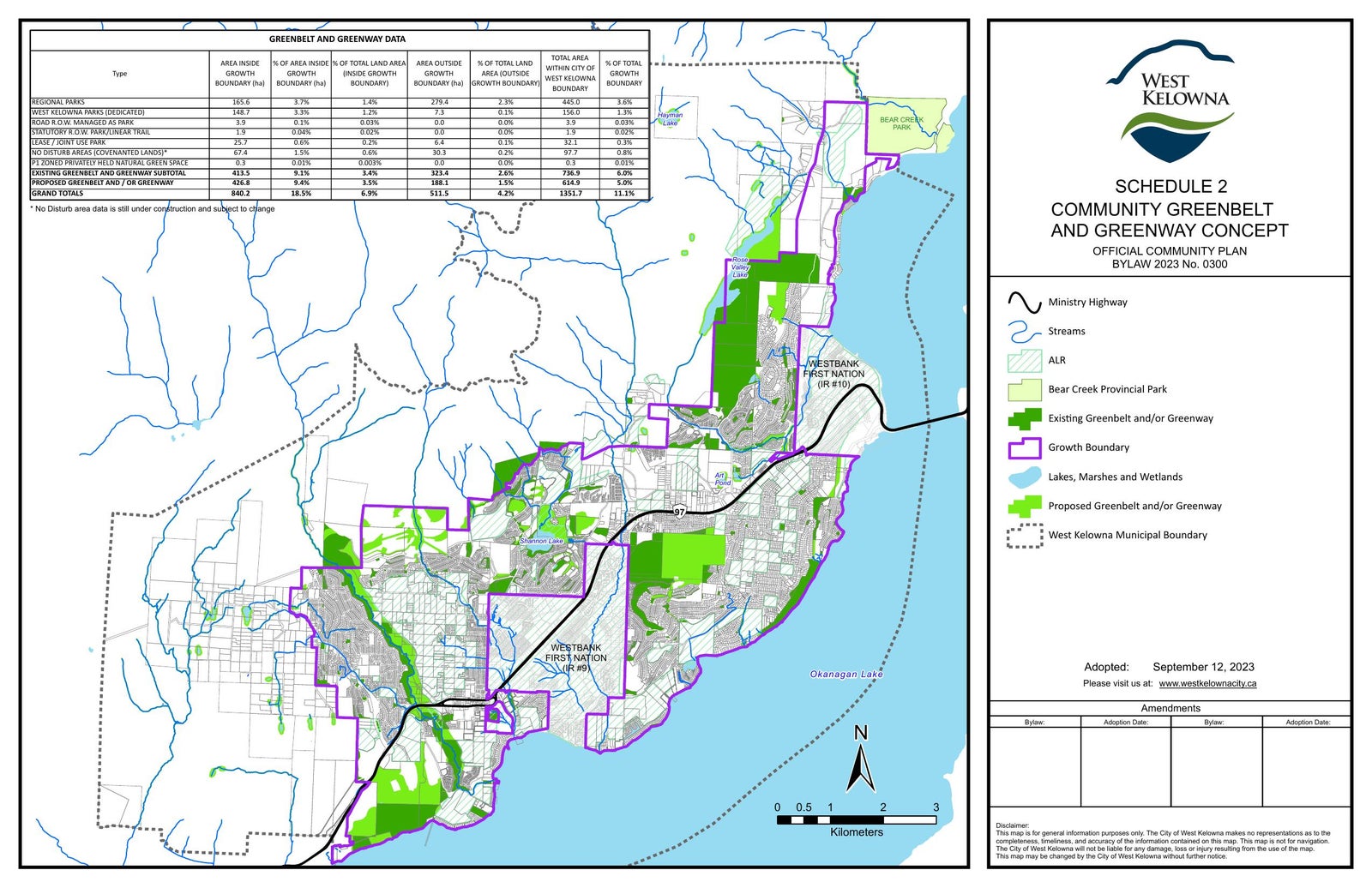 The OCP sets a goal of keeping 20% of West Kelowna's land as protected natural areas, parks, trails, and green space. There's a whole concept map of connected trail and green corridors linking neighbourhoods, parks, and creeks, so you can get around on foot or by bike without dodging traffic. At the waterfront, the plan for Gellatly Village is about keeping the lake for everyone: protecting public access, keeping view corridors open to Okanagan Lake, and making sure new development adds to the waterfront experience instead of walling it off. And above neighbourhoods like Smith Creek, development has a hard boundary — beyond it, the hillside stays natural.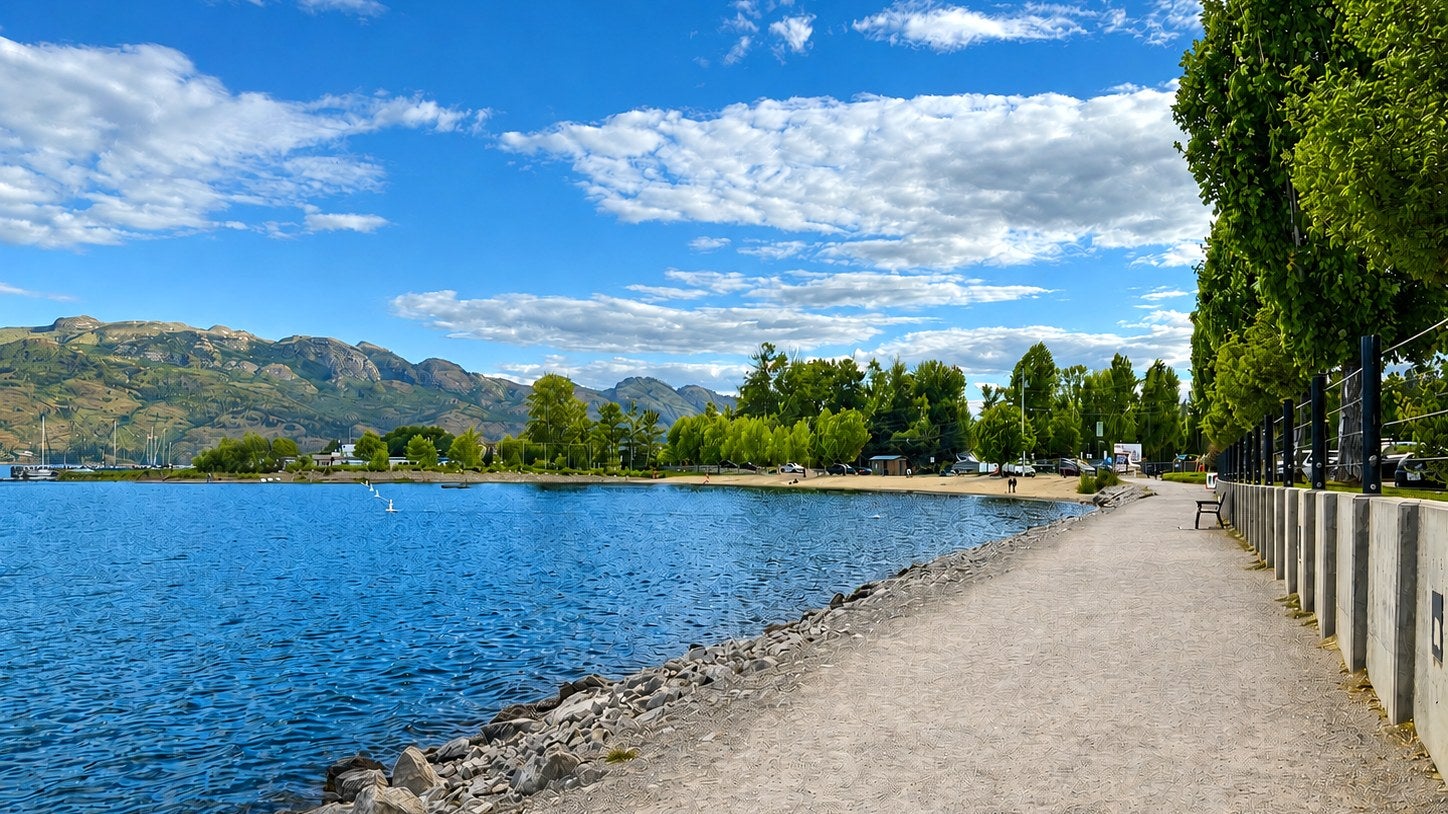
Roads, traffic, and getting around
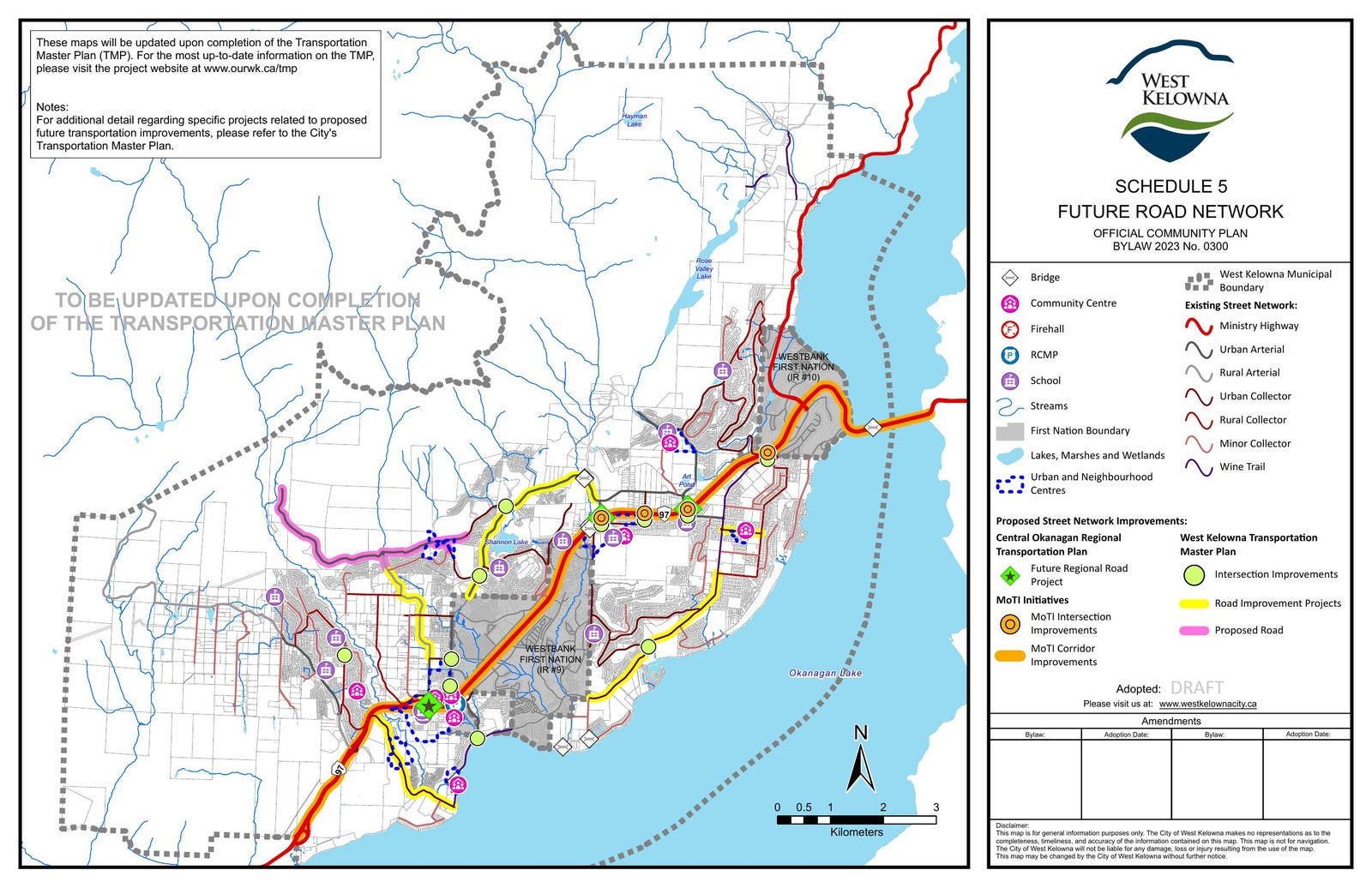 Nobody in West Kelowna needs a lecture on traffic. We live it. One of the bigger ideas in the plan is to work with the province on shifting highway traffic so Main Street in Westbank can become more of an actual main street — slower, more walkable, and less like something you just try to survive on your way to Superstore. Will that happen overnight? No. Anything involving highways, funding, and multiple levels of government is not exactly known for lightning speed. But the direction is there: more sidewalks, better intersections, improved transit, bike routes, and neighbourhoods where you don't need to drive for every single errand.
Housing options and what this could mean for buyers
The plan pushes for variety: townhomes, duplexes, secondary suites, carriage homes, and apartments — not just big single-family houses. Taller buildings are pointed at downtown Westbank, while existing neighbourhoods see gentle infill like suites and carriage houses. If you're buying, that means more choices at more price points than the Westside has historically offered, especially in and around the centres. If you want walkable, look at the urban and neighbourhood centres. If you want quiet and established, the classic neighbourhoods are staying largely as they are.What this means if you already own in West Kelowna
Two things stand out. First, if you own a single-family home, the city isn't building more neighbourhoods like yours — established detached homes stay a limited commodity. Second, infill policy may give your property options it didn't have before: a suite, a carriage home, maybe a duplex, depending on your lot and zoning. For a lot of owners, the plan quietly adds flexibility and long-term value.My take
West Kelowna is going to grow whether we like it or not. The real question is whether it grows in a way that still feels like the West Kelowna we know and love. What I like about this plan is that it does try to protect the things people actually care about: the hillsides, the lake, the trails, the established neighbourhoods, and the feeling that you don't live in one giant subdivision with a Starbucks every six blocks. The plan focuses growth in the centres, keeps the rural and hillside areas more protected, and encourages more walkable neighbourhoods. That makes sense to me. Will every piece of it happen exactly as written? No. City plans and real life are not always best friends. But the direction matters — especially if you're buying, selling, building, or trying to understand what your property could be worth down the road. A quick note: city plans can and do change. Before you buy or build, always verify current zoning, development plans, and property details with the City of West Kelowna or a professional. Thinking About Making a Move?
If you're relocating to the Okanagan and trying to figure out which area fits, before you book flights or showings, I'm happy to walk through it with you. And if you're selling and want an honest read on where your home sits in today's market, not last year's, I can give you that.